

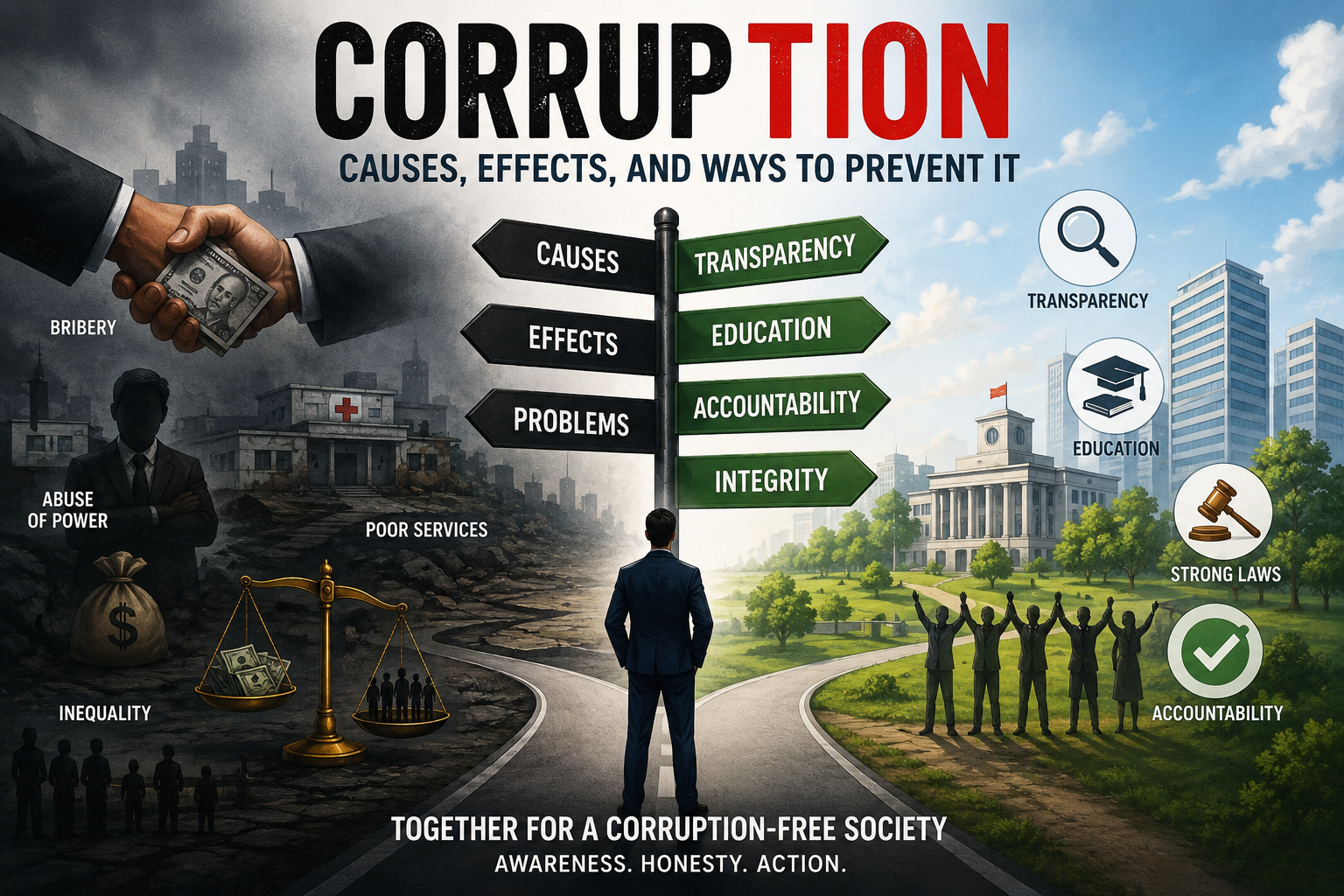
Introduction
One of the biggest challenges faced by societies all over the world includes the challenge of corruption. It is the abuse of one’s position of power or influence for one’s personal benefit. Some of the consequences of this vice include delayed development, widening inequality, and institutional mistrust, among many others.
The practice of corruption may be found in various areas, including politics, business, and education, among others.
What is Corruption?
“Corruption may be described as the exploitation of power or influence for personal benefit.” Such acts may include bribery, extortion, embezzlement, and misuse of authority. “Corruption is described as the giving or taking of bribes to gain an unfair advantage.”
Corruption does not affect just the economy, but everyone else too.
Causes of Corruption
Various aspects lead to the rise in corruption within society.
Lack of Transparency
In a situation where there is no transparency in the system, individuals will take advantage of their powers. In such instances, there will be room for engaging in corrupt activities.
Poor Law Enforcement
In a case where there is poor law enforcement, corrupt individuals will not fear punishment from the authorities. For one to prevent corruption, he/she needs to have strong laws.
Greed
It is due to greed that most individuals engage in corrupt activities. Such people need quick gains without thinking about the consequences of such actions on others.
Unawareness
Some individuals lack awareness of their rights. In such cases, they may easily fall into the traps of corruption.
Effects of Corruption
Corruption can cause many problems in a community as well as in an economy.
Effects of Corruption on the Economy
The effect of corruption can hinder the growth rate of an economy by creating competition and making the environment of businesses unfavorable. Money that could be utilized for economic development is wasted.
Widens Gap Between Rich and Poor
Most of the times, corruption benefits the elite class in the society whereas the poor suffer. The gap between rich and poor people becomes wider.
Poor Quality of Public Services
Public services such as health care facilities and infrastructure could get affected due to corruption by misappropriation of money.
Lack of Confidence in Government Systems
Ways to Prevent Corruption
The negative impacts of corruption within the society and economy include;
Economic Problems
Economic development is affected by corruption because it causes unethical business practices that prevent ethical businesses from thriving. Money meant for economic development is misused.
Social Gap
Corruption usually favors those few who have a lot of power while others do not. This results in social disparity.
Quality of Services
It is possible for services such as education, healthcare, and even infrastructure to be affected due to misappropriation of money.
Lack of Trust
When corruption cases are witnessed, people start to
Conclusion
Corruption poses a huge problem in the growth of society. Corruption undermines trust, creates inequality, and hampers development. But with proper legislation, transparency, education, and responsible citizens, the problem of corruption can be minimized.
Each individual has a responsibility to ensure the creation of a more honest society. Small acts of honesty and righteousness can shape a brighter future for all.